
Termite swarm in my Missouri home. Spring termite activity is picking up across the Kansas City, Missouri area. If you are seeing flying insects around your home, it may be one of the first warning signs of a nearby termite colony.

Homeowners across Kansas City, Missouri and surrounding communities like Liberty, Kearney, Lawson, Lathrop, and Polo often begin seeing termite swarmers in spring as temperatures warm up and moisture levels rise.
For many homeowners, swarmers are the first visible clue that termites may be active nearby. By the time these winged termites appear, a colony may already be established in the soil around the home or actively feeding on structural wood.
Understanding what a termite swarm is, how subterranean termites live, and what warning signs to look for can help you act early and avoid serious damage.
Termite Swarm in my Missouri Home
Swarming termites are often one of the first visible signs of a larger problem. Learn more about the signs of termite damage in Kansas City homes and how to identify early warning signs.
A termite swarm happens when a mature termite colony releases winged reproductive termites, often called swarmers, to start new colonies. These swarmers usually appear during spring when conditions are warm and humid.
Swarming is a natural part of the termite life cycle, but it is also an important warning sign for homeowners. A termite colony does not produce swarmers until it has matured, which means the colony may already be well established before you ever notice activity.
If you see termite swarmers indoors or around the outside of your home, it may signal that termites are nesting nearby and expanding.

Subterranean Termites: Why They Are a Serious Threat
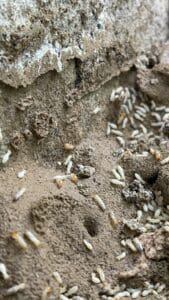
Why Homeowners Need to Pay Attention to Termite Activity
Subterranean termites are a major concern because they often work silently behind walls, under floors, and inside wooden structural components. Many homeowners do not realize they have a problem until visible damage starts to appear.
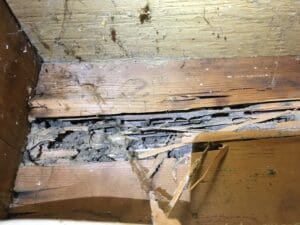
Because these termites feed on wood and other cellulose materials, they can weaken framing, trim, flooring, and other important parts of the home over time. The longer a colony remains active, the more serious the damage can become.
That is why early awareness matters. Spotting swarmers, mud tubes, or other warning signs early can make a major difference in how much damage is prevented.
Warning Signs to Watch Around Your Home
If termites are active around your home, there are often a few warning signs homeowners may notice.
- Flying termites near windows or lights
- Discarded wings on window sills or floors
- Wood that sounds hollow when tapped
- Bubbling paint or damaged trim
- Doors or windows that suddenly fit tightly
- Areas of unexplained wood damage
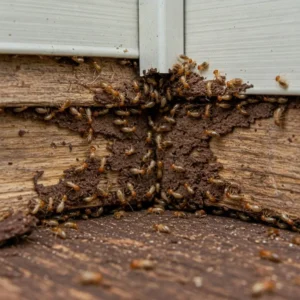
- Mud tubes along the foundation or crawlspace walls
If you notice one or more of these signs in Kansas City, Liberty, Kearney, Lawson, Lathrop, Polo, or nearby areas, scheduling an inspection is the best next step.
What To Do If You See a Termite Swarm
- Schedule a professional termite inspection
- Take photos of swarmers, wings, or mud tubes
- Avoid disturbing active areas
- Do not rely on store-bought sprays as a long-term fix
- Act quickly before the colony expands further
A professional inspection can help determine whether the swarm came from a nearby outdoor colony or from termite activity directly connected to the structure.
Do Termites Go Dormant in Winter?
Many homeowners assume termites become inactive during colder months, but that is not the case. Subterranean termites remain active below ground and can continue feeding on structures year-round.
Common Questions About Termite Swarms
Question: What is the difference between termite swarmers and flying ants?
Answer: Termite swarmers usually have straight antennae, a thicker waist, and two pairs of wings that are equal in length. Flying ants have bent antennae, a narrow waist, and uneven wing sizes.
Question: Does seeing a termite swarm mean I have termites?
Answer: It can mean termites are nearby or active in the structure. A swarm is often one of the earliest visible warning signs, which is why an inspection is important.
Question: Why do subterranean termites need mud tubes?
Answer: Subterranean termites need moisture to survive. Mud tubes protect them as they travel between the soil and the wood they are feeding on.
Question: How much damage can subterranean termites cause?
Answer: Over time, subterranean termites can damage framing, trim, flooring, support structures, and other wood components in a home.
Question: When is termite swarm season in Missouri?
Answer: In Missouri, termite swarm season usually begins in spring when temperatures warm up and humidity levels increase.
Question: What should I do if I find discarded wings in my home?
Answer: Discarded wings can be a sign of termite swarm activity. It is a good idea to document what you found and schedule a termite inspection.
Protect Your Home Before Termites Cause More Damage
If you are seeing termite swarmers, mud tubes, or other warning signs around your home, now is the time to act.
ZipZap Termite & Pest Control helps homeowners across Kansas City, Missouri and nearby communities including Liberty, Kearney, Lawson, Lathrop, and Polo identify termite activity early and protect their homes with professional termite inspections and treatment.

Jeffery Preece, BCE, PHE
Jeffery is the owner/technical director of ZipZap Termite & Pest Control. He is a board-certified entomologist and a public health entomology certificate holder.