Pest Control in Kansas City | Advanced Pest & Termite Solutions

Pest Library

Close-up of a tick on human skin.

Ticks & Fleas

Fleas are an essential pest because they cause discomfort from biting, but also can transmit several diseases such as plague and murine typhus. The cat flea is found throughout the United States and is the most common flea encountered.

Ticks are ectoparasites that suck blood and cause significant skin lesions that can cause secondary infections of the tissue. They are capable of transmitting a wide variety of diseases such as Lyme disease and encephalitis.

Ants

Close-up of a red and black ant isolated on white background.

Carpenter Ants

Carpenter ants in Kansas City can create major problems in your home. They are attracted to wood and moisture in homes. Carpenter ants do not eat wood, they shred it, making it look like sawdust in your Kansas City home. Members of Genus Camponotus [Hymenoptera: Formicidae]: Carpenter ants are widespread in Kansas City. We are an exterminator in Kansas City that can take care of your pest control needs in Kansas City.

Close-up of a black ant on a white background.

Little Black Ants

Little Black ants in Kansas City are a nuisance. Monomorium minimum [Hymenoptera: Formicidae]: Little Black ants are omnivorous and common in urban habitats. Worker ants are monomorphic, ranging about 1.5 – 3.0 mm long. They have slender bodies and are dark brown or black. Ant colonies nest outdoors and form conical craters. We are an ant expert in Kansas City that can take care of all your pest control needs in Kansas City.

Close-up of a black ant on a white background.

Odorous House Ants

Odorous House Ants (OHA) in Kansas City are an ant that generates many calls to our office. This ant is mainly active from early Spring to late Fall. Tapinoma sessile [Hymenoptera: Formicidae]: Odorous House Ant is a species that is widespread in Kansas City as an urban pest. Worker ants are about 3.0 – 3.5 mm long and monomorphic. Odorous House Ants are brownish grey with velvet-like appearance. They typically nest outdoors in soil or under wood and stones but will nest in your kitchen walls as well. We are an exterminator expert on Odorous House Ants in Kansas City that can take care of your pest control needs in Kansas City.

Close-up of a black ant on a white background.

Pavement Ants

Pavement ants in Kansas City are a nuisance to the outdoors. We generally don't see many of these ants indoors, although they can become an ant problem in our Kansas City homes. Tetramorium caespitum [Hymenoptera: Formicidae]: Pavement ants are omnivorous and forage throughout the year. They seek sweets and grease indoors, plant materials outdoors, and feed on roots and seeds. We are an exterminator in Kansas City that can take care of Pavement ants in and around your Kansas City home.

Pharaoh Ants

It is best not to spray a colony of Pharaoh ants when you find them around or in your Kansas City home. This could cause the colony to bud and become a lot bigger problem. Monomorium pharaonis [Hymenoptera: Formicidae]: A cosmopolitan urban pest believed to originate from Egypt (hence the name). Worker Pharaoh ants have small bodies measuring 1.5-2 mm long. Their head and thorax are reddish-yellow, and their gaster (abdomen) is a much darker color. Nests are unstructured and often use crevices as nesting sites. Queens cannot fly and mate in their nest.

Colonies may contain hundreds of queens, with each laying <4,500 eggs. Colonies may contain several hundred thousand workers. Workers do not sting, but their acid gland produces chemical repellent. Pharaoh Ants are urban pests in homes, office buildings, and hospitals. In hospitals, Pharaoh ants can serve as mechanical vectors for diseases, including Salmonella and Staphylococcus. We are an exterminator in Kansas City that can take care of your pest control needs in Kansas City.

Close-up of a shiny green and brown beetle on a white background.

Beetles

Beetles are among the largest order of insects that we know of that exist on the earth. Beetles come from the Order Coleoptera, which means Leathery Wings. Kansas City has many beetle species that are both destructive and beneficial to our community.

Bees

Bees are a very beneficial insect that must be protected here in Kansas City. We should not destroy the nest of bees or their hives. Bees produce honey which is a delicious food as well as pollinate many plants for humans to eat.

Bees in Kansas
Close-up of a mosquito against a white background.

Mosquito

Mosquitoes are a pest no one wants around. Mosquitoes can transmit encephalitis like the West Nile Virus. The best way to keep mosquito populations down would be to go to the breeding source. Any standing, stagnating water around your home must be eliminated, as well as old tires, plant pots with water basins, and birdbaths. Mosquitoes breed in water, and it is necessary for their survival.

Millipede

Millipede in Kansas City is an occasional invader that is a pest primarily due to organic matter around your home or high levels of moisture. Leaf litter around your home or stored items around your house that cause moisture to build up.

A close-up of a curled millipede with segmented body.
Close-up of a moth with brown and orange patterned wings.

Moth

Indian meal moths in Kansas City are a pantry pest and can be controlled by finding the source that is infested in your cabinets. IMM can infest all kinds of grains, dog food, birdseed, pasta, oats, nuts, and just about anything you store long term in your pantry or garage. The best pest control solution to get rid of them is to throw away what is infested.

Rodent

We have several mice species in Kansas City. We also have Norway rats that will invade your Kansas City home. At least 90% of the time, rats and mice will enter through the garage. Rodent proofing your garage is a very important step in keeping rodents out of your home. Going around the outside of your home and finding all the holes that come into your home and fixing them will also help with rodent problems.

A small black and white rat with pink paws on a white background.
bed bugs in semi-cab

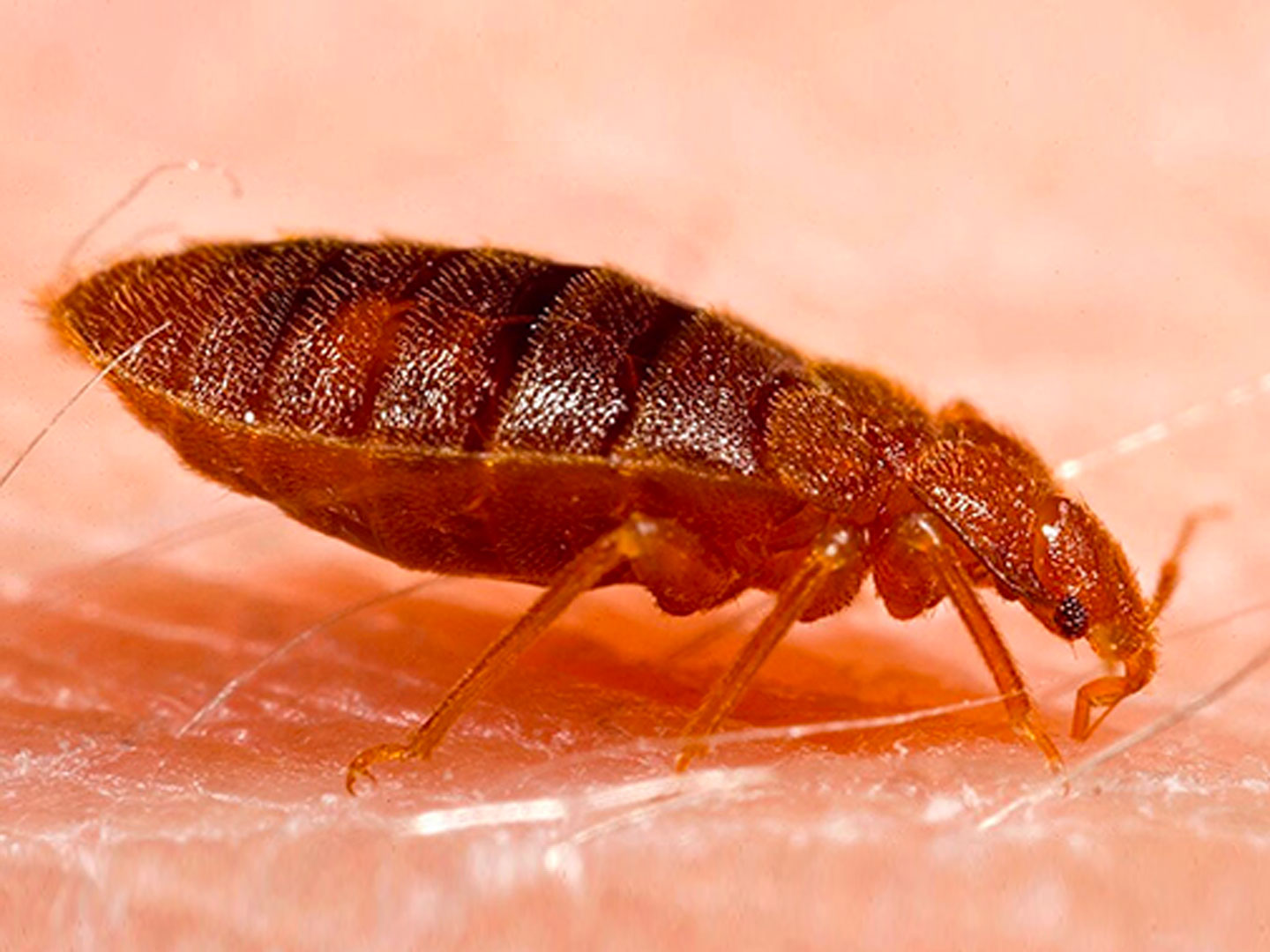
Bed Bugs

FAQ about bed bugs in Kansas City

Are bed bugs a real problem in the U.S.?

There is a real problem with bed bug infestations in the U.S., especially here in Kansas City. As a company, we went from 1-2 calls a year in 2005 for bed bugs to 1-2 per week in 2009 to 5-15 calls a day in 2014.

Cost is based on many factors, whether you have a heat treatment done or a treatment using products like liquids and dusts, the number of rooms being heated or treated with products, and the size of the unit being treated.

It is not possible to bring your home up to 125 degrees and maintain that temperature for an extended time for you to kill all stages of bed bugs from egg to nymphs to adults. Your furnace will shut off around 90 degrees which will not be hot enough.

Alcohol will kill the bugs you see and treat directly, but will not kill the eggs and the bugs you don’t see.

A whole house heat treatment can take between 8 to 12 hours.

You will not want to be in the house as it will be between 125-135 degrees for an extended amount of time.

Zip Zap Termite and Pest Control

If you find a bug in or around your home and need it identified, take a picture. Then text or email to the text line or email address below.

Please DO NOT text to the (816) 407-PEST number.

Flies

Flies and Fly control in Kansas City Missouri and Kansas

Revised by Richard M. Houseman
Division of Plant Sciences

More than 100,000 different kinds of flies have been discovered and named by scientists all over the world. Some common examples include house flies, horse flies, gnats, midges, and mosquitoes. All flies belong to the insect order Diptera, which means “two wings.” Since nearly all other insect groups have four wings, the name accurately reflects a unique feature of this group.

In nature, flies perform a vital function as decomposers of dead organisms, manure and decaying vegetation. These organic materials serve as breeding and egg-laying sites for the adult flies, and as food for immature flies, which are usually called maggots. Flies are also an important food source for many other kinds of organisms, including birds, fish, reptiles, and even some plants like the Venus flytrap.

 
Black and white drawing of a housefly with detailed wings and body.

Unfortunately, several species of flies and gnats have adapted to living in human structures. When flies are found in human structures, they are almost always considered to be nuisance pests. Some kinds of flies are also a potential threat to human or animal health. These flies may act as carriers of disease organisms present in their breeding and egg-laying sites. These disease organisms can cause food poisoning, diarrhea, dysentery or typhoid fever.

Appearance

The Carpenter ant is one of the largest ants.  Their length is anywhere from one-fourth to three-eighths inch long (1/4″-3/8″).  The most common color of the Carpenter ant is black.  Although some may have reddish or yellowish coloration.  Workers have large mandibles.  Mandibles are the ant’s lower jaw.

Habits

Carpenter ants usually nest in dead portions of standing trees, stumps or logs, or burrow under fallen logs or stones.  They will invade homes in search of food.

Diet

Carpenter ants do not eat wood.  They will eat anything people eat, particularly sweets and meats.  They will also feed on other insects.

Reproduction

The Carpenter ant queen will lay 15 to 20 eggs the first year.  The second year, she will lay up to 30 eggs.  Carpenter ant eggs will complete their life cycle in about 60 days.  Worker ants can live up to seven years.  The queen can live up to 25 years.  Usually the colony does not reach maturity and producing more young until the colony has about 2,000 or more workers.

Other Information

Colonies of Carpenter ants can contain up to 3,000 workers.  There are about 14 different species of Carpenter ants in Texas, alone.  The largest is the black carpenter ant, Camponotus Pennsylvanicus.  This species is primarily found in wooded areas.  These ants can bite but can not sting.

Carpenter Ant Prevention

A number of steps can be taken by homeowners to reduce the potential for future carpenter ant problems.

Stack firewood away from the foundation and elevate it off the ground. Never store firewood in the garage or other areas of the home, as firewood is a prime nesting area for carpenter ants.

Appearance

The Odorous House ant is dark reddish brown to black in color. They are about one-tenth inch long (1/10″). It’s antennae have 12 segments.

Habits

The Odorous House ant can be found in a variety of areas in the home. They are often found nesting in the walls or beneath the floor. They are most likely to invade homes during rainy weather. They travel in trails and forage for food day and night.

Diet

While in the wild, the ant enjoys honeydew melons. While inside the home, they prefer sweet items.

Reproduction

Each female in the nest lays one egg per day. The Odorous House ant’s young reach adulthood in an average of 24 days. Workers and females live for several years.

Other Information

The reason why they are called Odorous is because when they get crushed, they give off a very unpleasant odor. Their colonies are very large but can be driven away by invading Argentine ants.

Appearance

The Pavement ant is light brown to black in color. Its appendages are lighter than the rest of the body. It is about one-tenth inch long (1/10″). It has parallel lines on its head and thorax. The Pavement Ant also has 12 segments on its antennae.

Habits

The Pavement ant will invade the home to forage for food throughout the year. Nests are usually outdoors under stones, along curbs, or in the cracks of pavements. However, it can nest indoors inside of walls and under floors.

Diet

The Pavement ant is omnivorous, which means it can eat plants or animals. It will eat many things but prefer greasy and sweet foods.

Reproduction

The queen produces 5 to 20 eggs per day. They develop into adults in about 40 days. The Pavement ant’s larvae go through 3 stages.

Other Information

The Pavement ant is one of the most persistent and difficult ants to control if it has invaded your home. They live in very large colonies with up to several million workers and thousands of queens.